


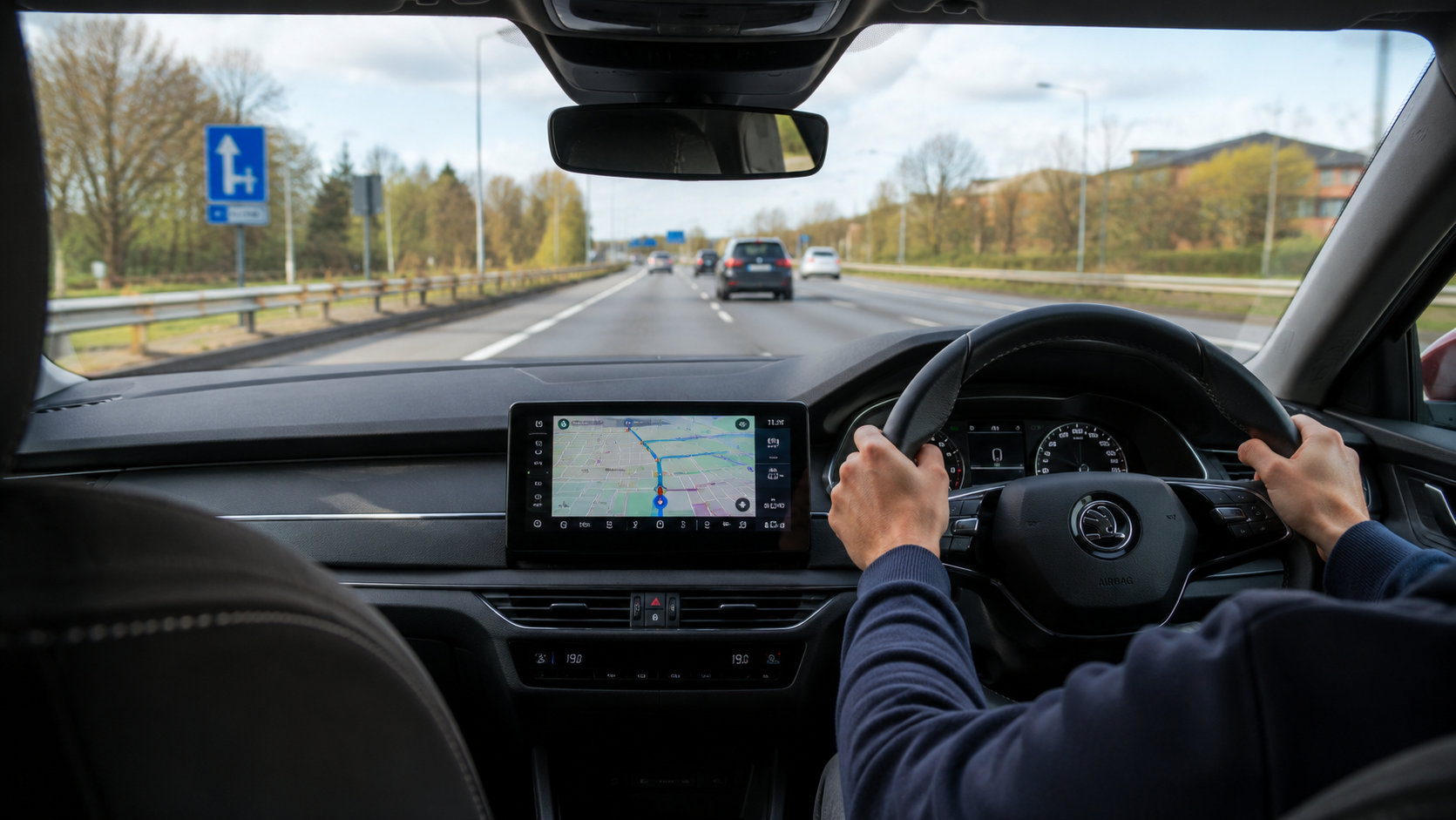
Passing your driving test is a major milestone, and for most people with ADHD, driving becomes a normal, manageable part of daily life. But ADHD can genuinely affect certain aspects of driving, from maintaining focus on a long motorway stretch to resisting the urge to check a phone at a red light. On top of that, UK law has specific rules about when you need to tell the DVLA about an ADHD diagnosis, and those rules trip up a surprising number of drivers simply because the guidance is not always easy to find in one place.
Search online and you will find a mix of accurate advice, outdated information, and understandable anxiety from drivers who are not sure whether being diagnosed with ADHD puts their licence at risk. The short answer is that, for most people, it does not. The longer, more useful answer involves understanding exactly what the law requires, what it does not require, and how to make practical decisions that keep you safe and legally compliant.
This guide brings together everything a UK driver with ADHD needs to know. It covers how ADHD can affect driving performance, exactly when you are legally required to notify the DVLA, how ADHD medication fits into the picture, what happens after you make a declaration, and practical strategies that genuinely help ADHD drivers stay safer behind the wheel. Whether you already hold a full licence, are learning to drive, or are still waiting for a diagnosis, this article should answer the questions that matter most.
How ADHD Can Affect Driving
Driving is, in many ways, a demanding executive function task. It requires sustained attention over long periods, quick decision-making, the ability to filter out irrelevant information, and consistent impulse control, all at the same time. These are precisely the areas where ADHD tends to cause the most difficulty, which is why research consistently shows that ADHD is associated with a higher rate of certain driving difficulties compared with the general population.
In practice, this can show up in several ways. Sustaining attention on a long, monotonous drive, such as a motorway journey with little visual variation, can be genuinely harder for an ADHD brain, which is often wired to seek novelty and can struggle with tasks that do not provide regular stimulation. Distraction is another common issue, whether that is a phone notification, a conversation with a passenger, or simply an intrusive thought pulling focus away from the road at the wrong moment.
Impulsivity can also play a role, showing up as quicker, less considered decisions such as a sudden lane change, tailgating out of frustration, or accelerating through an amber light rather than slowing down. Time blindness, a common ADHD trait, can contribute to speeding when a driver underestimates how much time has passed or overestimates how quickly they need to arrive somewhere. Finally, working memory difficulties can make it harder to track multiple things at once, such as remembering an unfamiliar route while also monitoring speed, mirrors, and surrounding traffic.
It is worth being clear that none of this means people with ADHD cannot be safe, capable drivers. Many are. It simply means that certain aspects of driving may need more conscious management, and that being aware of your own patterns is one of the most useful tools available.
What the Research Says About ADHD and Driving
A reasonable body of research has looked specifically at driving outcomes for people with ADHD, and the picture it paints is more nuanced than headlines sometimes suggest. Studies comparing drivers with and without ADHD have found that ADHD is associated with a higher likelihood of certain outcomes, including traffic violations, at-fault collisions, and licence suspensions, particularly among younger, newly licensed drivers.
However, the same body of research also points to something important: these risks are not fixed or inevitable. They tend to be highest in the early years of driving, before habits and experience have built up, and they are meaningfully reduced by treatment. Several studies looking at medication specifically have found that periods when ADHD medication is being taken consistently are associated with a measurably lower rate of traffic accidents compared with periods when the same individuals were not medicated. This is one of the more consistent and clinically useful findings in this area of research, since it suggests that well-managed ADHD, rather than an ADHD diagnosis in itself, is the more relevant factor.
This distinction matters for how we should think about ADHD and driving generally. The evidence supports treating ADHD as a manageable factor that benefits from awareness, consistent treatment where appropriate, and sensible practical strategies, rather than as something that should automatically limit someone's ability to drive. It also reinforces why the DVLA's rule is built around functional impact rather than diagnosis alone: the research broadly agrees that impact varies significantly between individuals and can change substantially with good management.
Common Myths About ADHD and Driving
A few misconceptions tend to circulate around this topic, and it is worth addressing them directly.
The first is the belief that any ADHD diagnosis must be reported to the DVLA. As covered above, this is not correct. The legal requirement is tied to functional impact on safe driving, not to the existence of a diagnosis.
The second is the assumption that ADHD medication makes someone unfit to drive. In reality, properly prescribed and monitored medication is far more often associated with improved driving safety than reduced safety, since it tends to support the sustained attention and impulse control that driving requires.
A third myth is that declaring ADHD to an insurer will automatically increase premiums significantly, or lead to a policy being refused. In practice, many insurers have no issue with a disclosed, well-managed ADHD diagnosis, and the impact, if any, is often smaller than people expect. Assuming the worst and avoiding disclosure altogether is a riskier path than simply asking directly.
Finally, some people believe that a childhood ADHD diagnosis that was never formally reassessed in adulthood does not need to be considered at all for driving purposes. If ADHD symptoms are ongoing and potentially affect driving, the same functional test applies regardless of when the original diagnosis was made.
Do You Have to Tell the DVLA You Have ADHD?
This is the question that causes the most confusion, so it is worth answering plainly. According to the official DVLA guidance on ADHD and driving, you only need to tell the DVLA if your ADHD, or your ADHD medication, affects your ability to drive safely. If your ADHD does not affect your driving, you do not need to notify them at all.
This distinction matters enormously. A diagnosis of ADHD, on its own, is not automatically a notifiable condition. The test is functional, not diagnostic: it is about whether your ability to drive safely is actually affected, not whether you have a label attached to your medical file. If you are unsure whether your ADHD affects your driving, the official guidance is clear that you should ask your doctor, since they are best placed to give an individual opinion based on your specific symptoms and how they present.
If your doctor does confirm that your ADHD or your medication affects your driving, you need to fill in form A1 and send it to the DVLA. The current address and full instructions are provided directly through the DVLA's guidance page, so it is worth checking there for the latest version of the form and process, since administrative details can change from time to time.
Failing to notify the DVLA when required is a serious matter. You can be fined up to one thousand pounds if you do not tell the DVLA about ADHD that affects your ability to drive safely, and you may also be prosecuted if you are involved in an accident as a result. The stakes are higher than many people realise, which is exactly why understanding the rule correctly, rather than assuming diagnosis automatically equals notification, is so important.
It is also worth knowing that this notification requirement is not unique to ADHD. The DVLA maintains a much broader list of medical conditions and disabilities that drivers are required to declare if those conditions affect safe driving, ranging from certain heart conditions to visual impairments. ADHD sits within this wider framework rather than being treated as an unusual special case.
If You Are Still Learning to Drive
Learner drivers are in a slightly different position. According to DVLA guidance, you do not usually need to tell the DVLA about your ADHD if you are still learning to drive, since your driving test itself is designed to assess whether you can drive safely. The examiner's job, in effect, does some of that safety assessment for you.
However, if your doctor has told you that your ADHD or your medication affects your ability to drive safely, and this has already been established before you take your test, you should tell the DVLA at that point rather than waiting. In practice, most learner drivers with ADHD go on to take their test without needing to make any special declaration, since the condition simply has not been flagged as affecting safe driving. If you are unsure where you stand, raising it with your GP or ADHD clinician during a routine appointment is a sensible way to get clarity before you book your test.
ADHD Medication and Driving: What the Law Says
Medication adds another layer to this picture, and it is one of the more misunderstood parts of the rules. Many people assume that simply being prescribed ADHD medication automatically means they must notify the DVLA. This is not accurate. The requirement is the same as for the underlying condition: you only need to tell the DVLA if your medication affects your ability to drive safely, whether that effect comes from the medication working well, from side effects, or from the process of adjusting to a new dose.
Common stimulant medications used to treat ADHD, such as methylphenidate or lisdexamfetamine, and non-stimulant options, can occasionally cause side effects that are directly relevant to driving. These might include difficulty sleeping which leads to daytime fatigue, changes in appetite that affect concentration, or, less commonly, increased anxiety or restlessness during titration, the period when a dose is being adjusted to find the right level. During titration specifically, it is worth being extra cautious and honestly assessing whether you feel fully alert and in control before driving, since this is the period when side effects are most likely to be noticeable.
If you take a stimulant medication for ADHD, it is also worth being aware of separate legal considerations around driving under the influence of certain controlled substances, since some ADHD medications fall into legally controlled categories. This is different from the DVLA notification requirement, and relates instead to roadside drug testing. If you are taking your medication exactly as prescribed and carrying proof of your prescription, this is rarely an issue in practice, but it is sensible to keep evidence of your prescription accessible, such as a repeat prescription slip or pharmacy label, in case you are ever asked about it.
If you are newly diagnosed and starting medication for the first time, it is worth discussing driving specifically with your prescribing clinician, since they can give tailored advice based on which medication you are starting, your dose, and how you personally respond during the early weeks of treatment.
What Happens After You Tell the DVLA
Notifying the DVLA does not automatically mean losing your licence. In many cases, especially where ADHD is well managed with medication or where symptoms are mild, the DVLA simply reviews the information provided and confirms that you can continue driving as normal, sometimes without any further contact required.
In some cases, the DVLA may ask for additional information, either from you directly or, with your consent, from your GP or specialist. This is a standard part of their process for many notifiable conditions, not a sign that something has gone wrong. Occasionally, a licence may be issued for a shorter period, requiring periodic review, particularly if there have been more significant concerns raised about safe driving.
The timescale for this process varies. Straightforward cases, where the information provided clearly shows the condition is well managed, are often resolved relatively quickly. More complex cases, where additional medical evidence is needed, can take longer, so it is worth notifying the DVLA promptly rather than waiting, since you are generally permitted to keep driving while your case is being considered unless you are specifically told otherwise or your doctor has advised you to stop.
It is worth noting that the DVLA does not automatically inform your car insurance provider when you make a notification, and vice versa. These are separate systems. However, you do have a separate obligation to inform your insurer about relevant medical conditions, which is covered in more detail below.
Professional and Vocational Driving Licences
If you drive, or want to drive, as part of your job, such as an HGV, bus, coach, or taxi licence, it is worth knowing that the standards applied by the DVLA are generally stricter for these Group 2 licences compared with an ordinary car licence. This reflects the greater potential consequences of an incident involving a larger vehicle, more passengers, or professional driving conditions such as long shifts.
For Group 2 licence holders, any change to a condition like ADHD that could realistically affect safe driving needs to be reported, and the DVLA may request more detailed medical information as part of its decision-making process. This does not mean an ADHD diagnosis automatically disqualifies someone from professional driving, since many people with well-managed ADHD hold these licences without issue, but the assessment process tends to be more thorough than for a standard licence.
If you are considering a career that involves professional driving and you have ADHD, or you already hold a vocational licence and have recently been diagnosed, it is worth discussing your specific situation with an occupational health professional or directly with the DVLA's medical enquiries team, since guidance can be tailored to your role, vehicle type, and how your ADHD presents day to day.
Insurance Considerations
Alongside the DVLA notification requirement, UK drivers also have a duty to disclose relevant medical information to their car insurance provider. Insurance policies generally require you to declare any condition that could affect your driving ability, and ADHD may fall into this category depending on your individual circumstances and how the condition affects you.
Failing to disclose a relevant condition to your insurer can have serious consequences if you are ever involved in a claim, since insurers can refuse to pay out, or even void your policy entirely, if they discover undisclosed information that they consider material to the risk they were insuring. This does not mean every driver with ADHD needs to declare it to their insurer, since the same functional test broadly applies: the relevant question is whether the condition affects your driving, not whether you carry a diagnosis.
If you are ever unsure whether to declare ADHD to your insurer, it is worth calling them directly and asking, since most insurers have a straightforward process for handling this and can confirm whether it affects your premium or policy terms. Many drivers with well-managed ADHD find that declaring it, where relevant, has little to no impact on their premium, particularly once they can show the condition is being actively managed.
Practical Strategies for Safer Driving With ADHD
Beyond the legal requirements, there is a lot that can be done practically to make driving with ADHD safer and less stressful. A number of strategies come up repeatedly among ADHD drivers and the clinicians who support them.
Reducing in-car distractions makes a meaningful difference. This might mean keeping your phone out of reach and on silent while driving, setting up navigation before you set off rather than while moving, and being mindful about background music or podcasts if they tend to pull your focus away from the road rather than helping you stay alert.
Planning routes and journey timing in advance helps offset both time blindness and working memory difficulties. Building in a buffer before you need to leave, rather than calculating the exact minimum travel time, reduces the pressure that often leads to rushed, riskier driving decisions.
Taking regular breaks on longer journeys is particularly important for ADHD drivers, since sustained attention on a long, low-stimulation motorway stretch is exactly the kind of task that an ADHD brain can struggle with most. Stopping every couple of hours, rather than pushing through fatigue, genuinely reduces risk.
Being deliberate about medication timing, in consultation with your prescriber, can also help, since taking medication too late in the day might affect sleep and next-day alertness, while taking it appropriately can help maintain the sustained focus driving requires. This is a conversation worth having directly with whoever manages your ADHD treatment.
Finally, some drivers find that specific driving instruction from an instructor experienced with neurodivergent learners, whether while learning or as a confidence-building refresher later on, helps build habits and hazard awareness that feel more natural and less effortful over time.
Using external structure in the car itself can also help. Simple habits, such as always placing your phone in the glovebox before setting off rather than relying on willpower to ignore it mid-journey, or running through a short, consistent pre-drive checklist covering mirrors, seatbelt, and destination, reduce the number of decisions you need to make from scratch each time. ADHD brains often perform better with externalised routines than with relying purely on memory or intention in the moment.
It also helps to be honest with yourself about your own patterns without being harshly self-critical. If you notice that you tend to drive less safely when tired, stressed, or when your medication has worn off later in the day, treating that as useful information rather than a personal failing allows you to plan around it, whether that means avoiding late-night motorway drives when possible or building in extra buffer time on particularly demanding days.
Getting Assessed If You Do Not Yet Have a Diagnosis
If you suspect you have ADHD and have noticed it affecting your driving, whether that is through near misses, difficulty concentrating on longer journeys, or feedback from others about impulsive decisions on the road, getting a formal assessment is a sensible next step. A diagnosis does not automatically mean anything changes with your licence, as covered above, but it does give you and your doctor a clearer, evidence-based picture of whether your driving needs any specific support or adjustment.
NHS waiting times for adult ADHD assessments remain long in many parts of the UK, which is why many adults choose a private ADHD assessment as a faster route to a formal diagnosis. You can read more about how long an ADHD diagnosis typically takes and what to expect from a private ADHD assessment if this is a route you are considering.
It is also worth understanding how ADHD is classified more broadly. We cover this in detail in our guide to whether ADHD counts as a disability, which is a useful companion piece if you are also thinking about workplace adjustments or other support alongside driving.
Finding a Private ADHD Assessment Near You
If NHS waiting times are the main barrier standing between you and clarity about your ADHD, a private assessment can often be arranged within weeks rather than years. We offer assessments both online and in person at clinics across the UK, and we have dedicated location pages with details specific to major towns and cities, including Manchester, Birmingham, London, Leeds, Glasgow, Bristol, Edinburgh, and Cardiff, alongside dozens of other UK towns and cities. Wherever you are based, it is worth checking whether we have a dedicated page for your city or region, since local pages often include specific details on clinic locations, in-person availability, and local waiting times.
Frequently Asked Questions
Does having ADHD mean I automatically have to declare it to the DVLA?
No. You only need to tell the DVLA if your ADHD or your ADHD medication affects your ability to drive safely. Diagnosis alone does not automatically trigger a notification requirement.
Will telling the DVLA about my ADHD mean I lose my licence?
Not usually. In many cases, the DVLA reviews the information and confirms you can continue driving as normal. A licence review or additional information request is more common than an outright refusal, and this generally only happens where there is a more significant safety concern.
Do I need to tell the DVLA if I am only just starting ADHD medication?
Only if your doctor confirms that the medication, including any side effects during the early adjustment period, affects your ability to drive safely. It is worth discussing this specifically with your prescriber when you start a new medication.
Can I drive on ADHD medication like methylphenidate or lisdexamfetamine?
Yes, most people can, provided the medication does not affect their ability to drive safely and it is taken exactly as prescribed. It is sensible to carry evidence of your prescription and to be extra cautious during any dose adjustment period.
Do I have to tell my car insurance provider about my ADHD?
This depends on whether it affects your driving, similar to the DVLA rule. If you are ever unsure, it is best to contact your insurer directly and ask, since undisclosed relevant conditions can affect a claim later on.
What happens if I do not tell the DVLA and I should have?
You can be fined up to one thousand pounds, and you may be prosecuted if you are involved in an accident connected to your condition. It is always safer to check with your doctor if you are unsure, rather than assuming notification is not required.
I am a learner driver with ADHD. Do I need to tell the DVLA before my test?
Usually not, since your driving test itself assesses your safety to drive. You should tell the DVLA before your test only if your doctor has already confirmed that your ADHD or medication affects your ability to drive safely.
Does ADHD affect Group 2 licences, such as HGV or taxi licences, differently?
Yes. The DVLA generally applies stricter standards to Group 2 vocational licences, and any relevant change in your ADHD or its treatment needs to be reported. This does not automatically disqualify you, but the review process tends to be more thorough than for a standard car licence.
Can I be tested for drugs at the roadside if I take ADHD medication?
Roadside drug testing is a separate legal area from DVLA notification and relates to specific controlled substances. If you take your ADHD medication exactly as prescribed, this is rarely an issue, but it is sensible to keep evidence of your prescription accessible in case you are ever asked about it.
Final Thoughts
ADHD does not have to stand in the way of safe, confident driving, but it does deserve honest, informed attention rather than being ignored or, at the other extreme, treated as an automatic barrier. Understanding the actual legal requirement, that notification depends on whether your driving is affected rather than on diagnosis alone, removes a lot of unnecessary worry for many drivers. Combined with a few practical habits around distraction, planning, and medication timing, most people with ADHD can and do drive safely for their entire lives.
If you suspect ADHD is affecting your driving, or any other part of your daily life, and you do not yet have a formal diagnosis, getting properly assessed is the clearest way to move from uncertainty to a plan you can actually act on.

.svg)


