


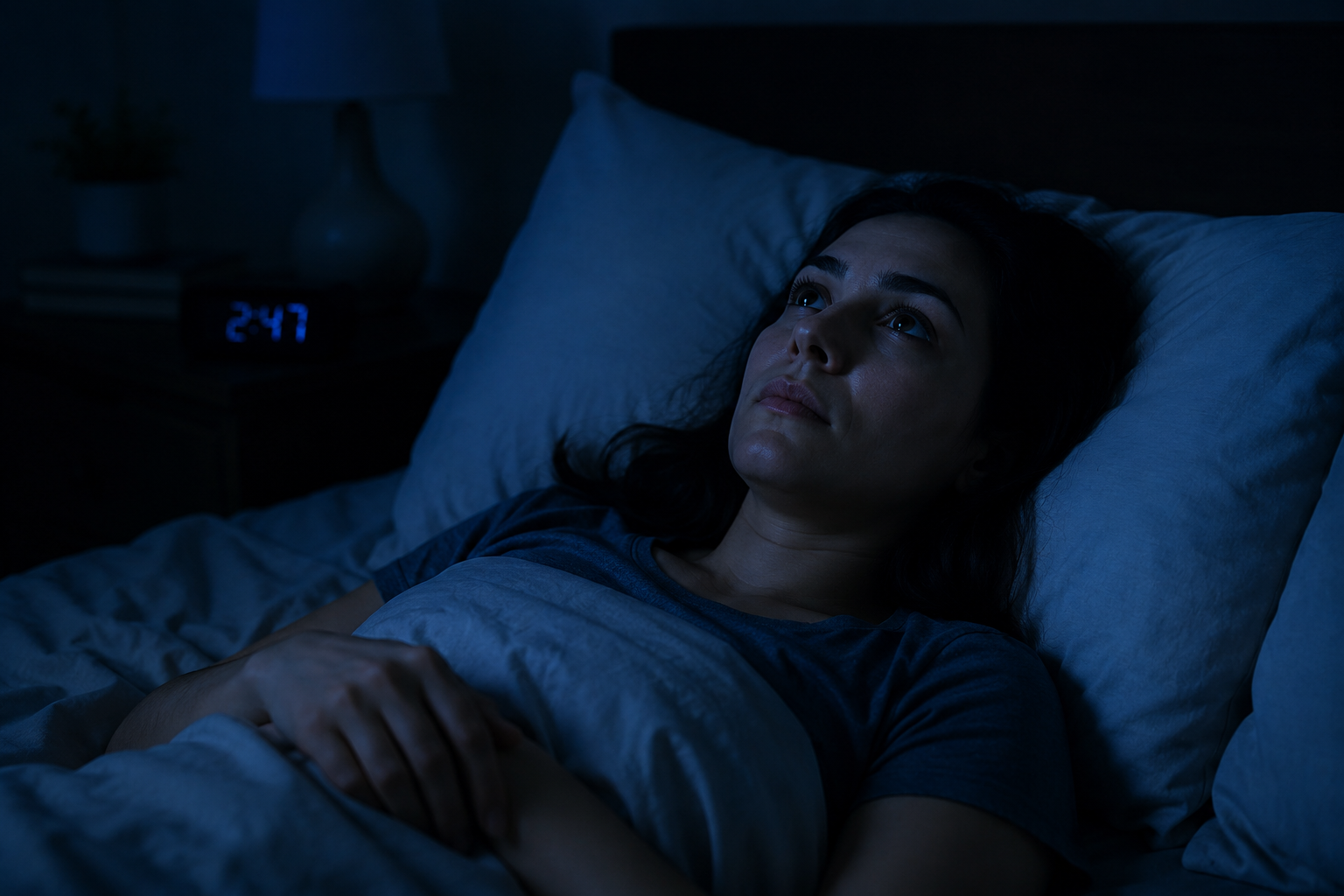
If you have ADHD, you have probably noticed that falling asleep is rarely straightforward. You lie down, your body is tired, but your brain refuses to switch off. You replay conversations from earlier in the day, follow chains of thought that lead nowhere useful, or suddenly remember something you meant to do three weeks ago. By the time you finally drift off, the night is already half gone.
This is not laziness or poor discipline. It is a recognised feature of ADHD that affects a significant proportion of people with the condition, and it causes real, measurable harm to quality of life, cognitive function, and emotional regulation. Yet sleep is rarely the first thing discussed when someone seeks an assessment or starts treatment.
This guide covers why ADHD and sleep problems are so closely linked, the specific sleep disorders that commonly co-occur with ADHD, what the evidence says about treatment, and how to find support across the UK.
Why ADHD and Sleep Problems Are So Closely Connected
Sleep difficulties are not just a side effect of ADHD. Research suggests they are a core feature of how the ADHD brain is wired. Studies estimate that between 25% and 55% of children with ADHD experience significant sleep problems, and the proportion is even higher in adults, with some research placing it at over 70%.
The connection operates through several mechanisms.
Dopamine and the Arousal System
ADHD involves differences in dopamine regulation, and dopamine plays a central role in the brain's arousal system. The same neurological patterns that make it difficult to sustain attention during the day also interfere with the brain's ability to shift into a lower-arousal state at night. People with ADHD often describe feeling most alert and mentally engaged in the hours between 10pm and 2am, a pattern that maps directly onto what researchers call delayed sleep phase.
The NHS recognises that sleep problems are a frequent co-occurring difficulty for people with ADHD. According to guidance from NICE (NG87), clinicians assessing adults and children with ADHD should actively enquire about sleep as part of a comprehensive evaluation.
Racing Thoughts at Bedtime
One of the most commonly reported experiences among people with ADHD is the phenomenon of thoughts accelerating precisely when they lie down to sleep. During the day, external stimulation provides constant input that, paradoxically, can help the ADHD brain stay regulated. Remove that stimulation at bedtime and the brain searches for its own. The result is a flood of thoughts, worries, plans, and mental associations that makes settling down genuinely difficult.
This is distinct from anxiety-driven rumination, although anxiety and ADHD frequently co-occur. For many people with ADHD, the bedtime thought spiral is not primarily about worry. It is about mental restlessness seeking stimulation in the absence of external input.
Delayed Sleep Phase Disorder
Delayed sleep phase disorder (DSPD) is a circadian rhythm disorder in which a person's natural sleep window is shifted significantly later than the socially expected norm. Someone with DSPD may not feel genuinely sleepy until 1am or 2am and, if left undisturbed, may sleep through until 10am or 11am. This is not a choice. It is a physiological pattern.
DSPD is substantially more common in people with ADHD than in the general population. A 2019 study published in the journal Sleep Medicine Reviews found that delayed melatonin onset was present in the majority of adults with ADHD, regardless of whether they reported subjective sleep problems. The internal clock of the ADHD brain tends to run late.
The practical consequences are severe. If someone with DSPD must wake at 7am for work or school, they are effectively waking in the middle of their biological night. Functioning on that schedule produces chronic sleep deprivation that significantly worsens every symptom of ADHD: attention, impulsivity, emotional regulation, and executive function all deteriorate under conditions of sleep debt.
Common Sleep Disorders That Overlap with ADHD
Beyond delayed sleep phase, several specific sleep disorders appear at elevated rates in people with ADHD. Understanding these is important because they each require different management approaches, and treating them can produce meaningful improvements in daytime ADHD symptoms.
Insomnia
Insomnia, characterised by difficulty falling asleep, staying asleep, or waking too early, affects people with ADHD at considerably higher rates than the general population. The relationship is bidirectional. Poor sleep worsens ADHD symptoms, and ADHD symptoms make it harder to maintain the consistent bedtime routines and mental wind-down that are associated with healthy sleep.
Cognitive behavioural therapy for insomnia (CBT-I) is the recommended first-line treatment according to NHS guidance. It involves techniques including sleep restriction, stimulus control, and addressing the cognitive patterns that perpetuate sleeplessness. For people with ADHD, standard CBT-I protocols may need adaptation to account for difficulties with consistent routine-following and cognitive flexibility.
Restless Legs Syndrome
Restless legs syndrome (RLS) involves an uncomfortable urge to move the legs, typically worst in the evening and at rest. It disrupts sleep onset and sleep quality. Research has found that RLS occurs at significantly higher rates in people with ADHD compared to the general population, and some researchers have proposed that both conditions share underlying dopaminergic pathways.
People with ADHD who experience RLS often find that the physical discomfort of lying still adds another layer of difficulty to an already challenging bedtime. If you regularly feel a crawling or uncomfortable sensation in your legs when trying to sleep, it is worth raising this with a clinician alongside your ADHD symptoms.
Sleep-Disordered Breathing
Obstructive sleep apnoea and other forms of sleep-disordered breathing disrupt sleep architecture even when the person is not consciously aware of waking. The resulting fragmented, unrestorative sleep produces daytime symptoms including difficulty concentrating, impulsivity, and emotional dysregulation. These symptoms overlap substantially with ADHD, which creates diagnostic complexity. Some people presenting with apparent ADHD may primarily have sleep-disordered breathing. Others may have both.
If you or a partner have noticed loud snoring, gasping, or pauses in breathing during sleep, this warrants investigation through your GP regardless of any ADHD diagnosis.
Hypersomnia
Less discussed than insomnia, hypersomnia refers to excessive daytime sleepiness that persists despite adequate or even prolonged sleep. Some people with ADHD describe sleeping for nine or ten hours and still waking unrefreshed, struggling to get out of bed, and experiencing heavy cognitive fog in the morning. This pattern is sometimes referred to informally as ADHD sleep inertia, and it can be severely disabling, affecting employment, relationships, and daily functioning.
How ADHD Medication Affects Sleep
Stimulant medications, including methylphenidate and lisdexamfetamine, are the most commonly prescribed treatments for ADHD in the UK and are recommended under NICE guidelines. They are effective at reducing core ADHD symptoms for many people. Their relationship with sleep, however, is complex.
In some people, stimulant medication improves sleep. By reducing the mental hyperactivity and restlessness that characterises evenings with unmedicated ADHD, it can make it easier to wind down. The research supports this for a subset of patients.
In others, stimulants make sleep worse. If medication is taken too late in the day, or if the dose is too high, it can extend the period of alertness and push sleep onset even later. This is particularly relevant for people already experiencing delayed sleep phase.
Non-stimulant medications such as atomoxetine have a different pharmacological profile and are sometimes preferred for patients where sleep disruption is a primary concern. The right approach depends on individual circumstances and should be worked through with the prescribing clinician during the titration process. You can read more about the titration process on the PrivateADHD medication page.
Practical Strategies for Better Sleep with ADHD
While professional treatment is important, there are evidence-informed strategies that people with ADHD can begin implementing independently. These are not generic sleep hygiene tips repackaged. They are approaches adapted specifically for how the ADHD brain functions.
Work With Your Biology, Not Against It
If you have a natural sleep phase that runs late, fighting it with rigid 10pm bedtimes often produces worse outcomes than finding a schedule that aligns more closely with your biology while gradually shifting it. Where possible, work with employers, educational institutions, or personal schedules to reduce the gap between when you need to wake and when your body is ready to sleep.
Use External Anchors for Bedtime Routines
People with ADHD often find that internal time awareness is weak. Relying on remembering to start a bedtime routine tends not to work. External triggers such as a phone alarm set for 90 minutes before your target sleep time, a smart light that automatically dims, or a specific piece of music that signals wind-down are more reliable than intention alone.
Address the Stimulation Problem Directly
If your brain seeks stimulation when you lie down, trying to achieve complete silence and darkness can paradoxically worsen the problem. Many people with ADHD find that low-level background stimulation, such as a podcast on a sleep timer, brown or white noise, or an audiobook set to stop after 30 minutes, gives the brain just enough input to stop generating its own, making sleep onset easier.
Keep a Consistent Wake Time
Sleep research consistently identifies consistent wake time as the most powerful single lever for stabilising circadian rhythm. Even if your sleep onset varies, anchoring your wake time creates a biological reference point that gradually pulls the sleep window into a more consistent shape. This is especially relevant for people with delayed sleep phase.
Melatonin
Low-dose melatonin, taken two to three hours before the desired sleep time, can help shift the circadian rhythm in people with delayed sleep phase. In the UK, melatonin is a prescription medication for adults outside its licensed use for children and older adults. It is worth discussing with your ADHD prescriber whether it might be appropriate for your situation. The evidence base for melatonin in ADHD-related sleep difficulties has grown substantially in recent years.
Manage Screen Exposure
Blue light exposure from screens suppresses melatonin production, but for people with ADHD the more significant problem is often the engaging, variable-reward nature of scrolling content, which is highly stimulating for the dopamine-seeking ADHD brain. Swapping screens for lower-engagement activities in the final hour before sleep is more important than simply applying a blue light filter.
The Impact of Sleep Deprivation on ADHD Symptoms
It is worth being explicit about what chronic sleep deprivation does to ADHD, because the effects are severe and frequently underestimated.
Sleep is when the prefrontal cortex, the brain region most implicated in executive function, consolidates the regulation it requires for the following day. Sleep-deprived prefrontal function is substantially impaired, and this maps directly onto worsened working memory, reduced impulse control, greater emotional reactivity, and more difficulty sustaining attention. In other words, poor sleep amplifies every core symptom of ADHD.
Research published in JAMA Pediatrics has demonstrated that children with ADHD who receive treatment for co-occurring sleep disorders show improvements in ADHD symptoms that are comparable in some cases to the effect of medication. This underscores how central sleep is to the management of the condition, not just a secondary consideration.
Adults with ADHD and significant sleep problems report substantially higher rates of depression, anxiety, relationship difficulties, and occupational impairment than those whose sleep is better managed. The quality of life toll is real and addressable.
Getting a Private ADHD Assessment That Takes Sleep Seriously
One of the limitations of overstretched NHS pathways is that clinicians under time pressure may not have adequate space to explore co-occurring difficulties like sleep in depth. A comprehensive private ADHD assessment should include detailed questioning about sleep history, current sleep patterns, and any specific sleep disorders that may be present.
At PrivateADHD, assessments are conducted by qualified clinicians working to NICE guidelines who consider the full picture of how ADHD presents in your life, including sleep. If you are concerned that undiagnosed or poorly treated ADHD is contributing to persistent sleep difficulties, or that your sleep problems are worsening your ADHD, an assessment is a sensible starting point.
Private ADHD assessments are available across the UK. Whether you are in London, Manchester, Birmingham, Leeds, Bristol, Sheffield, Liverpool, Newcastle upon Tyne, Nottingham, Leicester, Coventry, or Bradford, you can access a thorough, clinically sound assessment without joining a years-long NHS waiting list.
ADHD Sleep Difficulties Across the Life Span
Children and Teenagers
Sleep problems in children with ADHD are among the most distressing challenges families face. Bedtime resistance, difficulty settling, night waking, and early rising are all common. Parents frequently describe the bedtime routine as the hardest part of their day, characterised by escalating conflict as a child with ADHD struggles to transition out of a stimulating day into the quietness required for sleep.
For children, behavioural interventions are the first-line approach. Consistent routines, reduced screen exposure, calming activities in the hour before bed, and environmental modifications such as blackout curtains and white noise can all make a meaningful difference. Melatonin is licensed for use in children with neurodevelopmental conditions in the UK and is available on prescription. If your child is struggling, raise it explicitly at their next review appointment.
Information about child and teen ADHD assessments is available on the PrivateADHD child ADHD page.
Adults in Employment
For working adults, ADHD-related sleep disruption creates a particularly difficult cycle. Poor sleep worsens ADHD symptoms, worsened symptoms reduce productivity and increase stress, and stress makes sleep harder. Many adults in this situation have never connected their sleep difficulties to ADHD because they were never diagnosed. They may have spent years being told they are lazy, disorganised, or failing to look after themselves, when the root cause is a neurodevelopmental condition that has never been identified or treated.
If this resonates with you, you can find information about the adult assessment process on the adult ADHD assessments page.
Women and Girls
Research has increasingly highlighted that ADHD presents differently in women and girls, with internalised symptoms and masking more common. Sleep disruption, anxiety, and emotional dysregulation are particularly prominent features. Many women are diagnosed late, often in their 30s or 40s, having struggled for decades with what was labelled as anxiety, depression, or simply being a difficult sleeper.
Hormonal factors add further complexity. Oestrogen appears to have a modulating effect on dopamine systems, and fluctuations across the menstrual cycle, during pregnancy, and in perimenopause can all significantly affect both ADHD symptoms and sleep quality. Women who notice that their sleep difficulties track their hormonal cycle should mention this during assessment. You can read more about ADHD in women and late diagnosis on the PrivateADHD blog.
What to Expect When Raising Sleep at Your ADHD Appointment
If you are already receiving ADHD treatment and have not discussed sleep with your clinician, it is worth raising it at your next appointment. Come prepared with specific information: how long it typically takes you to fall asleep, what time you naturally fall asleep versus when you need to be up, whether you feel refreshed on waking, and whether your sleep difficulties preceded or followed the start of any ADHD medication.
A good clinician will take this information seriously. Sleep is not a peripheral concern in ADHD management. It sits at the centre of how well any treatment plan is going to work. Where sleep-specific intervention is warranted, this might involve medication timing adjustments, a referral for CBT-I, investigation for specific sleep disorders such as RLS or sleep apnoea, or discussion of melatonin.
If you are yet to receive an assessment and are living in a part of the UK outside the major cities, PrivateADHD has location pages covering towns and cities across England, Wales, Scotland, and Northern Ireland. You can find your nearest service in Oxford, Cambridge, York, Bath, Brighton, Portsmouth, Southampton, Reading, Norwich, Peterborough, Northampton, Derby, Stoke-on-Trent, Wolverhampton, Plymouth, or Bournemouth.
The Relationship Between ADHD, Sleep, and Mental Health
Sleep deprivation has a well-documented negative impact on mental health in the general population. For people with ADHD, who already have higher rates of co-occurring depression and anxiety, the additional burden of chronic sleep disruption can significantly complicate the picture.
Research has shown that sleep problems in people with ADHD are associated with higher rates of depression symptoms, greater anxiety, more frequent emotional dysregulation, and reduced quality of life. Treating the ADHD alone, without addressing the sleep, often produces incomplete results. Similarly, treating the sleep without addressing the ADHD leaves the underlying neurological driver of the sleep problems intact.
This is why integrated assessment matters. If you have been treated for depression or anxiety for years without substantial improvement, and you also experience persistent sleep difficulties and attentional challenges, it may be worth considering whether ADHD is a contributing factor that has not yet been explored. You can read more about the connection between ADHD and mood difficulties on the ADHD and depression page.
Finding Support Across the UK
PrivateADHD offers private ADHD assessments conducted by qualified clinicians, with a clear patient pathway from initial assessment through to diagnosis and, where appropriate, treatment. Assessments follow NICE guidelines and are available without the multi-year waits that have come to characterise NHS services in many parts of the country.
Services are available across England, Wales, Scotland, and Northern Ireland. If you are in the north of England, you can access assessments in Middlesbrough, Hartlepool, Grimsby, Doncaster, Rotherham, Chesterfield, Halifax, Rochdale, Stockport, Wigan, Bolton, Salford, Kingston upon Hull, Lancaster, Preston, or Carlisle.
In the Midlands and East of England, services cover Sutton Coldfield, Lincoln, Bedford, St Albans, Ely, Ripon, Chester, Hereford, Gloucester, Worcester, Milton Keynes, and Southend-on-Sea.
In the south and south-west, you can find services in Chichester, Winchester, Woking, Gillingham, Harlow, Swindon, Weston-Super-Mare, Wells, Truro, and Durham.
In Wales, services are available in Cardiff, Swansea, Newport, Bangor, and St Davids. In Northern Ireland, assessments are available in Lisburn, Londonderry, and Newry. In Scotland, you can access assessments in Glasgow, Edinburgh, Aberdeen, and Dundee.
Frequently Asked Questions
Does ADHD cause insomnia?
ADHD does not cause insomnia in a straightforward causal sense, but the two are closely linked. The neurological characteristics of ADHD, particularly differences in dopamine regulation and arousal, make it significantly harder for many people to fall asleep, stay asleep, or maintain consistent sleep timing. The relationship is bidirectional: poor sleep also worsens ADHD symptoms, creating a cycle that can be difficult to break without addressing both.
Can treating ADHD improve sleep?
For many people, yes. When ADHD medication reduces evening mental hyperactivity, some people find it easier to wind down. Non-stimulant options may be particularly helpful where sleep disruption is significant. Behavioural strategies adapted for ADHD can also produce meaningful improvement. That said, some people find that stimulant medication initially disrupts sleep if taken too late in the day, and dosage or timing adjustments may be needed during titration.
What is ADHD sleep inertia?
Sleep inertia refers to the grogginess and impaired functioning that occurs in the minutes or hours after waking. Most people experience some degree of this briefly each morning. People with ADHD frequently describe it as severe and prolonged, making it extremely difficult to get up, leave the house, or function normally for one to two hours after waking. It is thought to reflect the ADHD brain's difficulty shifting from a low-arousal to a high-arousal state, mirroring the same difficulty at night when trying to do the reverse.
Is delayed sleep phase disorder a form of ADHD?
No, they are separate conditions, but they commonly co-occur. Delayed sleep phase disorder involves a circadian rhythm shifted later than the socially expected norm. Research has found that a substantial proportion of people with ADHD also have DSPD, and both conditions share some underlying neurological features related to dopamine and the arousal system. They can be treated independently or together.
Where can I get an ADHD assessment if I also have sleep problems?
A comprehensive ADHD assessment should include exploration of sleep alongside other co-occurring difficulties. Private assessments through PrivateADHD are conducted by qualified clinicians who take a thorough clinical history. If you have significant sleep difficulties alongside ADHD symptoms, mention this when booking and during your assessment appointment. Treatment planning can then take both into account.
Summary
Sleep problems are a widespread and significant feature of ADHD, not a side issue. Between delayed sleep phase, insomnia, restless legs, and sleep-disordered breathing, the ways in which ADHD can disrupt sleep are varied and often severe. Chronic poor sleep amplifies every core symptom of ADHD and carries significant costs to mental health, relationships, and daily functioning.
The good news is that this is an area where intervention makes a real difference. Whether through adjusted medication timing, melatonin, CBT-I, or targeted sleep strategies adapted for the ADHD brain, there are effective approaches available. The starting point is making sure that sleep is on the agenda when you discuss your ADHD with a clinician, and that your assessment is thorough enough to capture the full picture of how ADHD affects your life.
If you are ready to take that step, private ADHD assessments are available across the UK. Visit the PrivateADHD assessment page to find out more, or browse your nearest location page for details on local availability.
.svg)


