


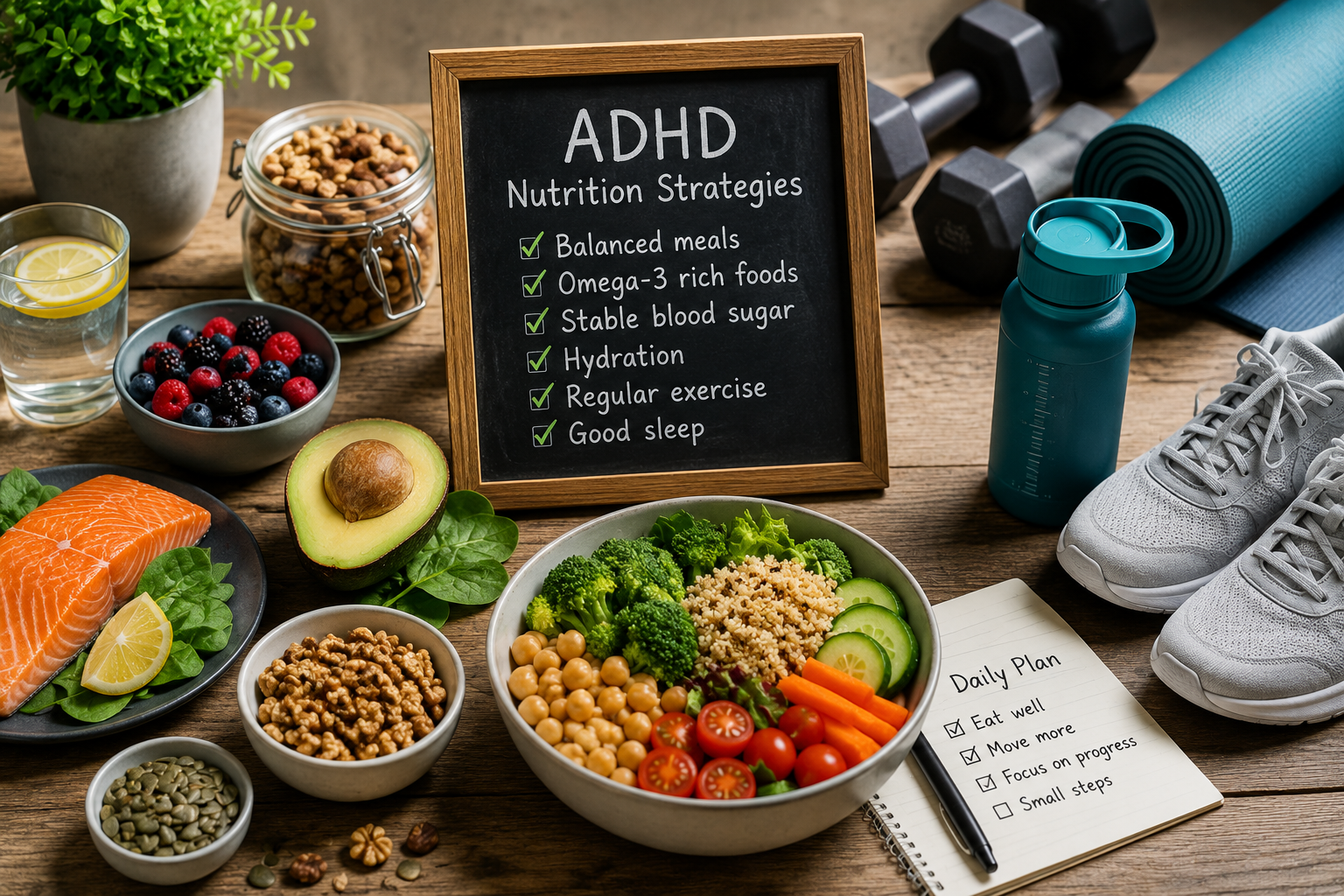
If you have ADHD, you have probably been told at some point to eat better, exercise more, or cut out sugar. The advice is well-meaning but rarely comes with much explanation. What does the evidence actually say about diet, nutrition, and physical activity in relation to ADHD? Which dietary changes are genuinely supported by research, and which are overstated? And how does all of this interact with medication, assessment, and the broader management of the condition?
This guide works through the evidence carefully, without overclaiming. Diet and exercise are not a substitute for a proper ADHD assessment or for evidence-based treatment. But for many people with ADHD, making informed choices about food and physical activity can meaningfully support how well they function day to day, alongside whatever other treatment they are receiving.
This guide covers what the research says about ADHD and nutrition, which nutrients matter most, the specific foods worth prioritising or limiting, how exercise affects the ADHD brain, and how to find support across the UK.
Can Diet Affect ADHD Symptoms?
The short answer is yes, but with important caveats. No specific diet has been shown to cure or comprehensively treat ADHD. The condition is neurological and genetic in origin, and dietary changes cannot alter the underlying neurodevelopmental differences that characterise it. However, the brain is a metabolic organ that is profoundly affected by what we eat, and certain nutritional patterns are associated with better or worse cognitive function, attention regulation, and emotional stability.
Research in this area has grown considerably over the past two decades. Several nutrients have been identified as particularly relevant to the dopaminergic and noradrenergic systems that are implicated in ADHD. Deficiencies in these nutrients appear more common in people with ADHD than in the general population, and correcting them can, in some cases, produce measurable improvements in symptoms.
It is also worth noting that the relationship between diet and ADHD is bidirectional. ADHD itself affects eating behaviour. Impulsivity can lead to poor food choices. Executive function difficulties make meal planning and consistent eating patterns genuinely hard. Hyperfocus can cause people to forget to eat entirely. Understanding these dynamics is part of approaching nutrition with ADHD realistically.
Key Nutrients and the ADHD Brain
Several specific nutrients have a meaningful evidence base in relation to ADHD. These are not supplements to take casually or in excess, but they are worth understanding so that dietary choices and, where appropriate, medical consultation can be informed.
Omega-3 Fatty Acids
Omega-3 fatty acids, particularly EPA (eicosapentaenoic acid) and DHA (docosahexaenoic acid), are among the most studied nutrients in relation to ADHD. They are essential components of brain cell membranes and play a central role in neuronal communication and dopamine signalling.
Multiple systematic reviews and meta-analyses have found that omega-3 supplementation produces modest but statistically significant improvements in ADHD symptoms, particularly inattention and hyperactivity, in children. The effect size is smaller than that of stimulant medication but is considered clinically meaningful, particularly as an adjunct to other treatment.
People with ADHD have been found in several studies to have lower blood levels of omega-3s than those without the condition. Dietary sources include oily fish such as salmon, mackerel, sardines, and trout. For those who do not eat fish regularly, algae-based omega-3 supplements provide a plant-based alternative. Current NHS dietary guidance recommends eating at least two portions of fish per week, one of which should be oily.
The NHS guidance on fish and omega-3 provides a useful starting point for understanding recommended intakes.
Iron
Iron is required for the synthesis of dopamine, and low iron levels are associated with worse ADHD symptoms. Studies have found that a significant proportion of children with ADHD have low ferritin levels, and that iron supplementation in those with documented deficiency can improve attention and reduce hyperactivity.
It is important to note that iron supplementation is not appropriate without confirmed deficiency, as excess iron carries health risks. If you suspect iron deficiency, the correct step is a blood test through your GP. Dietary sources of iron include red meat, lentils, beans, fortified cereals, spinach, and tofu. Vitamin C consumed alongside iron-rich plant foods significantly increases absorption.
Zinc and Magnesium
Zinc is involved in dopamine metabolism and in regulating the function of the transporter proteins that ADHD medications act on. Studies have found lower zinc levels in children with ADHD compared to controls, and there is some evidence that zinc supplementation improves the response to stimulant medication, potentially allowing lower effective doses.
Magnesium plays a role in over 300 enzymatic reactions in the body and is involved in neurological function and the regulation of the stress response. Deficiency is associated with increased anxiety, irritability, and sleep disruption, all of which are common co-occurring difficulties in ADHD. Dietary sources of magnesium include nuts, seeds, dark chocolate, leafy green vegetables, and whole grains.
Protein and Neurotransmitter Function
Protein provides the amino acid building blocks from which neurotransmitters including dopamine and noradrenaline are synthesised. Adequate protein intake, particularly at breakfast, has been associated with better attention and reduced impulsivity throughout the morning in children with ADHD.
Many people with ADHD skip breakfast or eat carbohydrate-heavy meals in the morning, which can contribute to blood sugar volatility and worsen attentional difficulties in the first half of the day. Prioritising protein at breakfast, whether from eggs, Greek yoghurt, nuts, seeds, or lean meat, is one of the most practical and evidence-informed dietary adjustments available.
Vitamin D
Vitamin D receptors are found throughout the brain, including in areas involved in dopamine regulation. Lower vitamin D levels have been found in children with ADHD compared to controls in several studies, and a 2018 randomised controlled trial found that vitamin D supplementation significantly improved ADHD symptoms in deficient children.
Vitamin D deficiency is extremely common in the UK given the limited sunlight, particularly in autumn and winter. The NHS recommends that everyone in the UK consider a daily supplement of 10 micrograms between October and March. For people with ADHD and confirmed deficiency, higher supplementation under medical guidance may be appropriate.
Blood Sugar, Energy, and Focus
The relationship between blood sugar regulation and ADHD symptoms is one of the most practically relevant aspects of diet for people with the condition. The brain depends on a steady supply of glucose to function, and when blood sugar levels spike and then crash, cognitive function and emotional regulation suffer. For the ADHD brain, which already has less regulatory reserve, these fluctuations can be particularly destabilising.
Foods with a high glycaemic index, including white bread, sugary drinks, sweets, and highly processed snacks, cause rapid spikes in blood glucose followed by sharp drops. The energy crash that follows can intensify inattention, irritability, and impulsivity. By contrast, foods with a lower glycaemic index release glucose more slowly, providing a more stable energy supply to the brain.
Practical strategies for managing blood sugar with ADHD include eating regular meals rather than allowing long gaps, prioritising complex carbohydrates such as oats, legumes, brown rice, and whole grain bread over refined versions, combining carbohydrates with protein and healthy fats to slow glucose absorption, and avoiding high-sugar snacks as a primary energy source.
These changes do not require a rigid or restrictive approach to eating. The goal is stable energy, not perfection.
Elimination Diets and Food Sensitivities
Elimination diets, which involve removing specific foods or food groups to see whether symptoms improve, have been studied in the context of ADHD for several decades. The evidence is mixed and the approach carries some practical risks, particularly in children, where nutritional adequacy must be carefully maintained.
Artificial Additives and Colourings
The most robust evidence in the elimination diet literature relates to artificial food colourings and certain preservatives. A landmark study published in The Lancet in 2007 found that a mixture of artificial colourings and the preservative sodium benzoate increased hyperactivity in children both with and without ADHD. This research led to the introduction of warning labels on products containing these additives across the European Union.
The NHS guidance on ADHD and diet acknowledges the evidence base for artificial additives and recommends reducing consumption of foods containing them, particularly in children. While removing additives alone is unlikely to resolve ADHD, it is a reasonable and low-risk step that may contribute to reducing symptom severity in some individuals.
Common sources of artificial colourings include brightly coloured sweets, fizzy drinks, flavoured crisps, some cereals, and certain sauces and condiments. Reading ingredient labels is the most practical way to identify them.
Sugar and ADHD
The popular belief that sugar causes or dramatically worsens ADHD is not well supported by the research evidence. Controlled studies have not found a consistent causal relationship between sugar intake and ADHD symptom severity. The association in everyday observation may reflect confounding factors: high-sugar foods are often consumed alongside artificial additives, and sugary eating patterns are associated with broader dietary quality issues.
That said, the blood sugar regulation argument discussed above provides a sound practical reason for moderating high-sugar food intake, independent of any direct effect on ADHD neurobiology.
Gluten and Dairy
Gluten-free and dairy-free diets are sometimes recommended for ADHD, but the evidence base is weak for the general ADHD population. There is some evidence that individuals with coeliac disease or non-coeliac gluten sensitivity may experience ADHD-like symptoms that improve on a gluten-free diet, but this reflects the effect of treating an underlying condition rather than a general benefit of gluten avoidance.
Eliminating entire food groups without clinical indication carries risks of nutritional deficiency and places significant burden on daily life. If you suspect a genuine sensitivity or intolerance, the appropriate step is investigation through your GP or a registered dietitian, not unguided elimination.
ADHD Medication, Appetite, and Eating Patterns
Stimulant medications, including methylphenidate and lisdexamfetamine, are the most commonly prescribed treatments for ADHD in the UK, as recommended under NICE guidelines (NG87). One of their most common side effects is appetite suppression, which can significantly affect eating patterns, particularly in children.
The practical implications of this are important. If medication is taken before breakfast and appetite is suppressed by the time breakfast would normally be eaten, many people end up going through the first part of the day without adequate nutrition. This can contribute to energy crashes later in the day and undermine the benefits of medication on cognitive function.
Common strategies include eating a nutritious breakfast before taking medication, having a small protein-rich snack shortly before the medication takes effect, planning for a larger meal in the evening when appetite returns, and using weekends or non-school days to ensure adequate caloric intake. These approaches should be discussed with the prescribing clinician during the titration process. You can read more about medication management on the PrivateADHD medication page.
Exercise and the ADHD Brain
Physical exercise is one of the most consistently well-supported non-pharmacological interventions for ADHD. The evidence is strong, the effect is immediate as well as cumulative, and the mechanism is well understood.
Exercise increases the availability of dopamine and noradrenaline in the prefrontal cortex, the same neurotransmitters that stimulant medications act on. It also stimulates the release of brain-derived neurotrophic factor (BDNF), which supports neuroplasticity and the development and maintenance of the neural circuits involved in attention and executive function.
A 2015 meta-analysis published in the journal Neuroscience and Biobehavioural Reviews found that acute bouts of aerobic exercise significantly improved executive function, attention, and inhibitory control in children with ADHD. These effects were observed immediately after exercise and persisted for a meaningful period afterwards.
Aerobic Exercise
Aerobic exercise, which raises heart rate and breathing rate and sustains this for a period of time, produces the most robust evidence for ADHD benefit. Running, cycling, swimming, team sports, and brisk walking all qualify. Even a single 20 to 30 minute bout of moderate-intensity aerobic activity has been shown to improve attention and reduce hyperactivity in children with ADHD in the hours that follow.
For adults, the evidence points in the same direction. Regular aerobic exercise is associated with improvements in working memory, attention regulation, and emotional dysregulation, all of which are core challenges in ADHD. The effect is comparable in some studies to a low dose of stimulant medication, though the two are complementary rather than interchangeable.
Strength Training
Resistance training has received less research attention in the context of ADHD than aerobic exercise, but the evidence that exists is promising. A 2019 study found that resistance exercise improved attention and executive function in children with ADHD, with some evidence suggesting it may be particularly helpful for impulsivity and hyperactivity.
For adults, strength training provides the additional benefit of structured, goal-oriented activity that suits the ADHD preference for concrete, measurable progress. The focus required by weightlifting or resistance work can itself function as a form of active engagement that suits the ADHD attentional profile.
Yoga and Mindful Movement
Yoga, tai chi, and other forms of mindful movement have been studied as adjunct interventions for ADHD. While the evidence base is smaller than for aerobic exercise, several studies have found improvements in attention, anxiety, and self-regulation following yoga programmes in children and adults with ADHD.
The mechanisms likely involve both the physical activity component and the attentional training inherent in mindful movement, which asks practitioners to repeatedly redirect awareness to the body and breath, a practice that mirrors the attentional regulation skills that are difficult for the ADHD brain.
When to Exercise for Maximum Benefit
The timing of exercise relative to tasks requiring high cognitive demand is worth considering. Research suggests that the cognitive benefits of aerobic exercise are most pronounced in the 30 to 120 minutes following activity. For school-age children with ADHD, physical activity before demanding academic work may therefore be particularly beneficial.
For adults, scheduling exercise before the most cognitively demanding part of the working day, or before situations known to be difficult such as meetings, complex tasks, or emotionally loaded conversations, can help leverage the immediate attentional benefits of physical activity.
Practical Nutrition Strategies for ADHD
Understanding the evidence is one thing. Implementing dietary changes with ADHD is another. Executive function difficulties, impulsivity, irregular schedules, and the sheer cognitive load of meal planning make consistent healthy eating genuinely harder for people with ADHD than for the general population.
The following strategies are adapted for the realities of living with ADHD rather than assuming neurotypical levels of planning and consistency.
Keep the kitchen stocked with high-protein, easy-to-prepare foods that require minimal decision-making. Greek yoghurt, boiled eggs, cheese, nuts, and tinned fish are all high in protein and require no cooking. Reducing the barrier to good choices is more effective than relying on willpower and planning.
Use external systems rather than internal reminders for eating regularly. A phone alarm set for meal times, a visible weekly meal plan on the fridge, or a simple routine that ties eating to an existing anchor such as arriving home or finishing work reduces the reliance on prospective memory, which is a common area of difficulty in ADHD.
Batch cooking on days when executive function is higher can remove the daily burden of deciding what to eat. Having pre-prepared meals or components in the fridge means that good food choices are available even on days when organisation and motivation are low.
Accept imperfection as part of the process. The ADHD tendency towards all-or-nothing thinking can undermine dietary consistency. A day of poor eating does not negate the benefit of consistent good choices at other times. The goal is a general dietary pattern, not perfection at every meal.
Diet and Exercise in Children with ADHD
For parents of children with ADHD, the interaction between diet, exercise, and behaviour is often intensely felt. The child who has eaten breakfast is different from the one who has not. The child who has had a run around before school is easier to engage than the one who has been sedentary all morning.
These observations are consistent with the research evidence. For children with ADHD, the priority dietary goals are adequate protein at breakfast, reduced artificial additives and colourings, regular meals to stabilise blood sugar, and correction of any documented nutritional deficiencies.
Physical activity for children with ADHD should ideally be enjoyable and socially embedded. Team sports, martial arts, swimming, cycling, and dance all provide the aerobic benefit alongside the additional advantages of structure, social connection, and mastery of a skill. Children with ADHD often thrive in environments where physical activity has a clear goal or competitive element.
School environments that include physical activity breaks, particularly before academic sessions, have been shown to improve attention and behaviour in children with ADHD. If your child's school does not currently offer this, the evidence base is strong enough to make a compelling case to school leadership.
Information about assessments for children is available on the PrivateADHD child and teen ADHD page.
Adults with ADHD and Eating Patterns
Adults with ADHD face a distinct set of challenges around diet and nutrition. The executive function demands of grocery shopping, meal planning, and consistent cooking sit precisely in the areas where ADHD creates the most difficulty. The result, for many adults, is a diet that is more processed, more irregular, and less nutritionally complete than they would like.
There is also an established link between ADHD and disordered eating, including binge eating and emotional eating. The impulsivity of ADHD combined with the dopamine-seeking quality of high-sugar, high-fat foods creates a pattern in which food becomes a source of reward and stimulation. This is not a character flaw. It is a predictable consequence of ADHD neurobiology, and it can be addressed as part of a comprehensive treatment plan.
Adults with ADHD are also at higher risk of forgetting to eat during periods of hyperfocus, then compensating with large or impulsive meals later in the day. This irregular pattern compounds blood sugar dysregulation and can worsen mood, energy, and cognitive function in the second half of the day.
Regular exercise in adults with ADHD has benefits that extend well beyond symptom management. It is associated with lower rates of depression and anxiety, better sleep quality, improved self-esteem, and greater sense of control, all of which are areas where adults with ADHD commonly struggle. Even modest amounts of regular aerobic activity, three sessions of 30 minutes per week, can produce meaningful improvements across these domains.
You can find more information about adult assessment and support on the adult ADHD assessments page.
Getting a Proper Assessment
Diet and exercise can support the management of ADHD, but they cannot replace an accurate diagnosis and appropriate treatment. If you are managing significant attentional difficulties, impulsivity, or executive function challenges without a formal assessment, you may be missing out on the most effective interventions available.
A private ADHD assessment through PrivateADHD is conducted by qualified clinicians working to NICE guidelines. It provides a thorough clinical picture of how ADHD is affecting your life and forms the basis for an appropriate, individualised treatment plan. Diet, exercise, medication, and psychological support can then be considered together as part of a coherent approach.
NHS waiting times for ADHD assessments have grown to several years in many parts of the UK. Private assessment removes that barrier and provides clarity much sooner.
Finding Support Across the UK
PrivateADHD offers private assessments across England, Wales, Scotland, and Northern Ireland. If you are in a major city, you can access assessments in London, Manchester, Birmingham, Leeds, Bristol, Sheffield, Liverpool, Newcastle upon Tyne, Nottingham, Leicester, Coventry, and Bradford.
Across the north of England, services cover Middlesbrough, Hartlepool, Doncaster, Rotherham, Chesterfield, Halifax, Rochdale, Stockport, Wigan, Bolton, Salford, Kingston upon Hull, Grimsby, Lancaster, Preston, and Carlisle.
In the Midlands and East of England, assessments are available in Wolverhampton, Sutton Coldfield, Derby, Stoke-on-Trent, Lincoln, Northampton, Peterborough, Bedford, Cambridge, Ely, Norwich, Hereford, Gloucester, Worcester, and Chester.
Across the south and south-west of England, services are available in Oxford, Reading, Milton Keynes, St Albans, Southend-on-Sea, Harlow, Gillingham, Woking, Chichester, Winchester, Portsmouth, Southampton, Brighton, Bournemouth, Swindon, Bath, Weston-Super-Mare, Wells, Plymouth, and Truro.
In the north-east, assessments are available in York, Ripon, and Durham. In Wales, services cover Cardiff, Swansea, Newport, Bangor, and St Davids. In Northern Ireland, you can access assessments in Lisburn, Londonderry, and Newry. In Scotland, services are available in Glasgow, Edinburgh, Aberdeen, and Dundee.
Frequently Asked Questions
Does sugar cause ADHD?
No. The evidence does not support a causal link between sugar intake and ADHD. ADHD is a neurodevelopmental condition with strong genetic roots, and it cannot be caused by diet. However, high-sugar diets can worsen blood sugar instability, which may intensify symptoms in people who already have ADHD. Moderating sugar intake for blood sugar regulation reasons is sensible, but it will not prevent or cure the condition.
Should everyone with ADHD take omega-3 supplements?
The evidence for omega-3 supplementation in ADHD is reasonably strong, particularly for children. It is not a replacement for medication or other treatment but may be a useful adjunct. If you eat oily fish at least twice a week, supplementation may be unnecessary. If you do not, a good quality EPA and DHA supplement is a low-risk option worth discussing with your clinician.
How much exercise is needed to see benefits for ADHD?
Even a single 20 to 30 minute bout of moderate-intensity aerobic exercise produces measurable improvements in attention and executive function that last for one to two hours. For cumulative long-term benefit, current guidance suggests at least 150 minutes of moderate aerobic activity per week for adults, and at least 60 minutes of activity per day for children. The most effective approach for ADHD is regular, consistent activity rather than infrequent intense sessions.
Can diet and exercise replace ADHD medication?
For most people with clinically significant ADHD, diet and exercise alone are not sufficient to manage the condition. They are valuable adjuncts that can meaningfully support wellbeing and symptom management, but the evidence base for medication, particularly stimulants, is substantially stronger. The right approach for most people is a combination of treatment options tailored to individual circumstances, which is best determined through a thorough assessment and ongoing clinical review.
Should I mention my diet and exercise habits at my ADHD assessment?
Yes. A comprehensive assessment should cover all aspects of how ADHD affects your daily life, including eating patterns, physical activity, sleep, and energy levels. This information helps the clinician form an accurate picture and develop a treatment plan that takes your individual circumstances into account. If you have noticed patterns between your diet, exercise, and symptom severity, these observations are clinically useful.
Summary
Diet and exercise are not cures for ADHD, but they are genuinely meaningful components of managing the condition well. The evidence supports a diet rich in omega-3 fatty acids, adequate protein particularly at breakfast, stable blood sugar through low-glycaemic food choices, and reduced artificial additives. Nutritional deficiencies in iron, zinc, magnesium, and vitamin D are worth investigating and correcting where found.
Regular aerobic exercise produces immediate and cumulative improvements in attention, executive function, and emotional regulation through the same dopaminergic mechanisms that ADHD medication targets. Even modest amounts of consistent physical activity make a meaningful difference.
Implementing these changes with ADHD requires strategies adapted to the realities of executive dysfunction, impulsivity, and irregular routines. External systems, reduced friction for good choices, and self-compassion about consistency are more effective than willpower alone.
None of this replaces a proper diagnosis and evidence-based treatment. If you have not yet received a formal assessment, that remains the most important step. Visit the PrivateADHD assessment page to find out more, or browse your nearest location page for details on availability in your area.
.svg)


